
Your live stream is the beginning of the conversation, not the end of it. A Sunday service is built like a sermon series: a big concept, major themes, and individual points. Every one of those layers can keep the conversation going with your congregation all week long on the social platforms where your people already spend their time, and it can point them toward what is coming next Sunday.
As ministers and church staff, everything we work on during the week seems to be pointed to and focused at our Sunday Morning service.
Sunday School teachers, Worship leaders, the Band, the Youth Pastor and definitely the Lead Pastor are all preparing lessons, music and sermons all for the 4-5 hour window between 8 am and 12:30 pm on Sundays.
Even the media department and volunteers are preparing everything for the service and the live stream. Once lunch time comes around, we can all breathe a little bit, and then begin prepping for next week….But….
The Stream is Just The Beginning
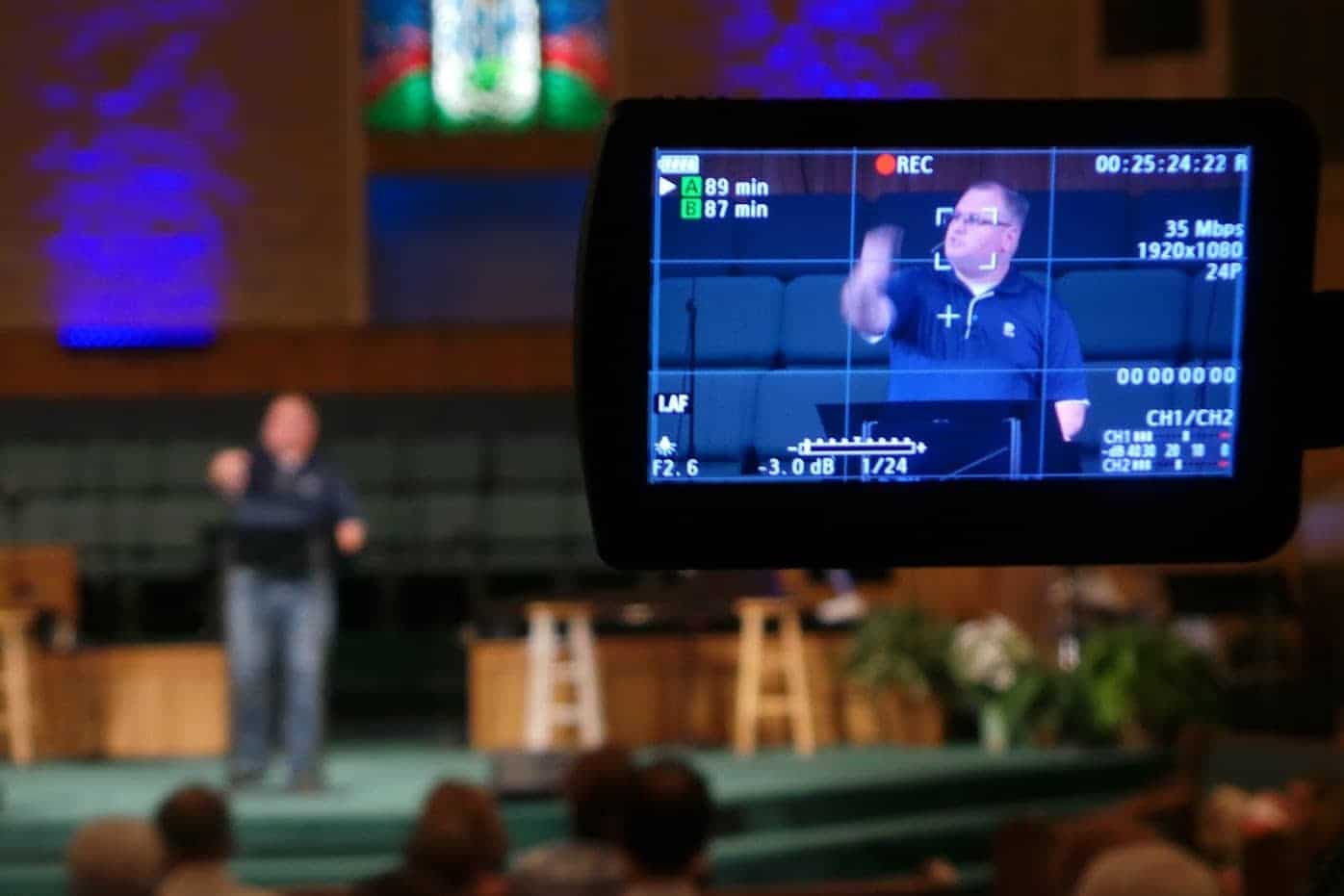 If you’ve been watching CTA LIVE or have talked to me or heard me speak, you know that I keep hammering the idea that the live event (the Sunday service(s) ) is the beginning of a conversation with the congregation. This holds true for the folks physically there in the seats as well as those watching remotely….. or at least, it should be the beginning of the conversation.
Most pastors work through topics in a series. Much like a blogger does. Most pastors I know, plan out a year of their sermon series – their “content” – in at least a general way. Many of them will make rough plans for what series for what quarter or month and then adjust those plans as the Holy Spirit or current circumstances dictate. That’s kind of “par for the course”.
As with any series, they break things down from a macro level (the concept of the series) to the major themes (we sermon) to the fine details of those themes (the points in the sermon). Each of those points, as well as the larger concept and themes, are all parts of an ongoing conversation.
That conversation can be continued throughout the week and then be directed towards the next theme and points that will be brought up in next Sunday’s service.
Social Media Helps Continue The Conversation
If you’re apathetic or negative when thinking about social media, you need to seriously re-think.
Jesus spent his official ministry NOT standing in the entryway of the Synagogue beckoning folks to come hear him preach. He spent His among the people. Traveling around, visiting people. Talking to the crowds that followed him.
He came into town and went to a well to grab a quick drink. A Samaritan woman who was basically a slut (two HUGE cultural strikes against her) came to draw some water. They started talking and he opened her eyes to her own sin and need of redemption. She encountered Christ that day and her life was changed.
He was speaking in a group one day and noticed this little guy sitting up in a tree. Being Christ, he knew that this guy was a hated and vilified member of society – a corrupt tax collector – but he knew that the man was genuine in his desire to see The Messiah. He walked over to him and told him to come down because He and his disciples wanted to come have dinner at the guy’s house.
Jesus went where the people were. He didn’t just teach at the temple – which He did do – but also, went to where the common man was.
That’s where we as ministers and Christians need to be – where the people are.
Some Social Stats
 Facebook has 1.9 Billion users
- 1.28 billion people log onto Facebook daily active users (Facebook DAU) for first Quarter of 2017, which represents a 18% increase year over year (Source: Facebook as 05/03/17)
- There are 1.74 billion mobile active users (Mobile Facebook MAU) for December 2016 which is an increase of 21% year-over-year (Source: Facebook as of 02/01/17).
- Highest traffic occurs mid-week between 1 to 3 pm. (Source: Bit.ly blog)
- Instagram has over 500 Million active users
- Users share an average of 95 million photos and videos each day.
- Most Instagram users are between 18-29 years old.
- Six in ten online adults have Instagram accounts.
- Female account for 38% of active users
- Men account for 26%.
- Teenagers account for 32% and consider Instagram to be the most important social network.
- YouTube
- YouTube has 1.3 Billion active users
- 300 hours of video content is uploaded… EVERY HOUR
- Nearly 5 Billion videos are viewed each day
- 8 out of 10 18-49 year olds watch YouTube content.

The People Are There
These stats tell me one REALLY big thing… People are congregating on these social networks.
That means that if we want to reach them, we should have a presence there and start interacting with them.
You’re church members are already on Facebook, Instagram and YouTube. They’re also likely on Pinterest, SnapChat, Twitter and who-knows-where-else.
It’s important that we as ministers and church media folks start creating content that people can consume on these platforms.
See this episode of CTA LIVE for some practical ideas on how to reuse your live stream recording and continue the conversation.
 Watch us on YouTube
Live streaming your church does not have to be complicated.
Download the free guide, Live Streaming for Churches – The Easy Way, and learn a simple, proven way to stream your services with the team and budget you already have.

Frequently asked questions
Why is the live stream just the beginning?
Everything a church does all week points at the Sunday service, but the service itself is the start of a conversation with the congregation, both the people in the seats and the people watching remotely. That conversation can continue through the week and lead into the next theme and the next Sunday.
How does a sermon series turn into a week of content?
Pastors plan series the way bloggers plan: a macro concept for the series, major themes under it, and the fine details of each point in each sermon. The concept, the themes, and the points are all parts of the same conversation, and each one can carry discussion between Sundays.
Where should a church continue the conversation?
Where the people already are. Your members are on Facebook, Instagram, and YouTube every day, along with the rest of your community. Jesus went where the people were instead of only teaching at the temple, and a church’s media should do the same.